Community health workers training is one of the most cost-effective investments a nonprofit, government, or health organization can make to close the healthcare gap in underserved communities. Trained community health workers (CHWs) serve as the vital bridge between formal medical systems and families who would otherwise never receive care.
According to the World Health Organization (WHO), community health workers are essential to achieving universal health coverage — especially in low- and middle-income regions where physician density is critically low. Yet despite their importance, CHW programs often fail because of poor training design, lack of supervision, and inadequate resources.
In this article, we break down 6 proven community health workers training strategies that leading organizations around the world use to build capable, confident frontline health heroes — and how you can apply them today.
Why Community Health Workers Training Matters More Than Ever
The global health workforce shortage is not shrinking it is growing. The WHO estimates a shortfall of 10 million health workers by 2030, with the most severe gaps in the communities that need help most. Community health workers fill that space but only when they are properly trained.
Untrained or poorly supervised CHWs can unintentionally spread misinformation, miss critical referrals, or erode community trust in healthcare. That is why structured, evidence-based community health workers training is not optional it is a matter of life and death.
At Compassionate HealthEd Foundation, our Nursing & Allied Health Training Program is built on exactly this principle: train well, supervise consistently, and empower communities to own their health.
What Is a Community Health Worker?
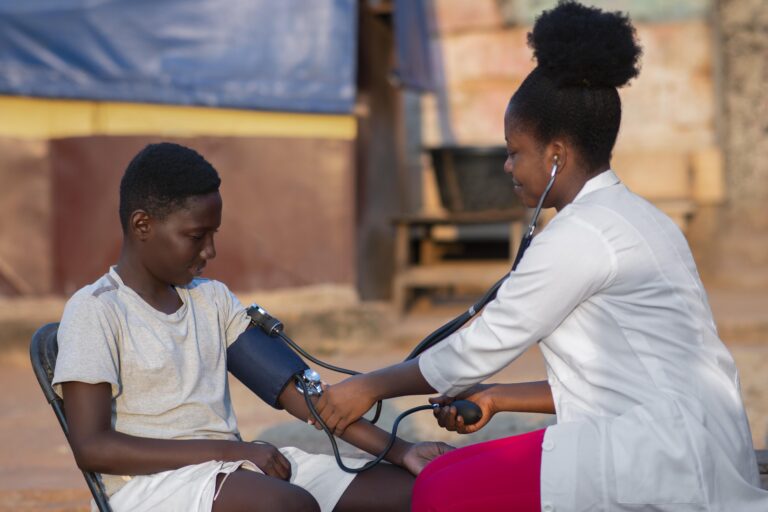
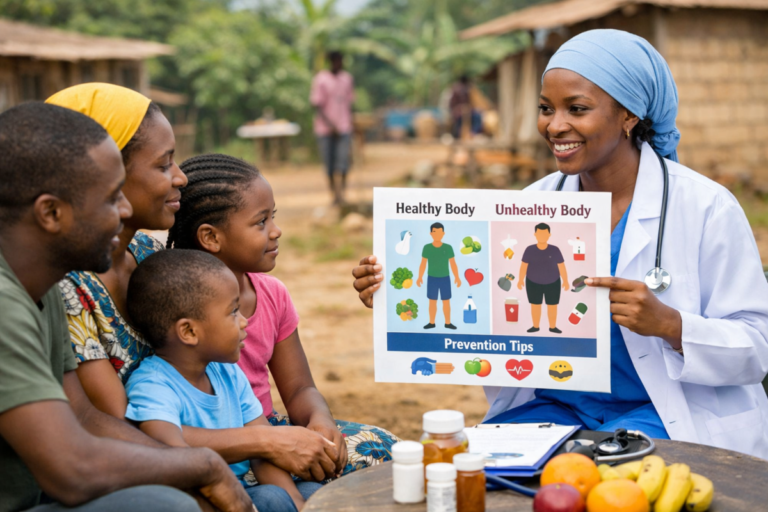
A community health worker is a trained layperson often from the same community they serve — who provides basic health education, first aid, disease screening, referrals, and emotional support. Unlike doctors or nurses, CHWs work at the grassroots level: in homes, markets, schools, and places of worship.
Their power lies in trust. Because they are community members, people talk to them openly about symptoms they would never mention to a stranger in a white coat. When equipped with the right skills through solid community health workers training, CHWs become one of the most powerful tools in public health.
The 6 Proven Community Health Workers Training Strategies
Strategy 1
Competency-Based Curriculum Design for Community Health Workers Training
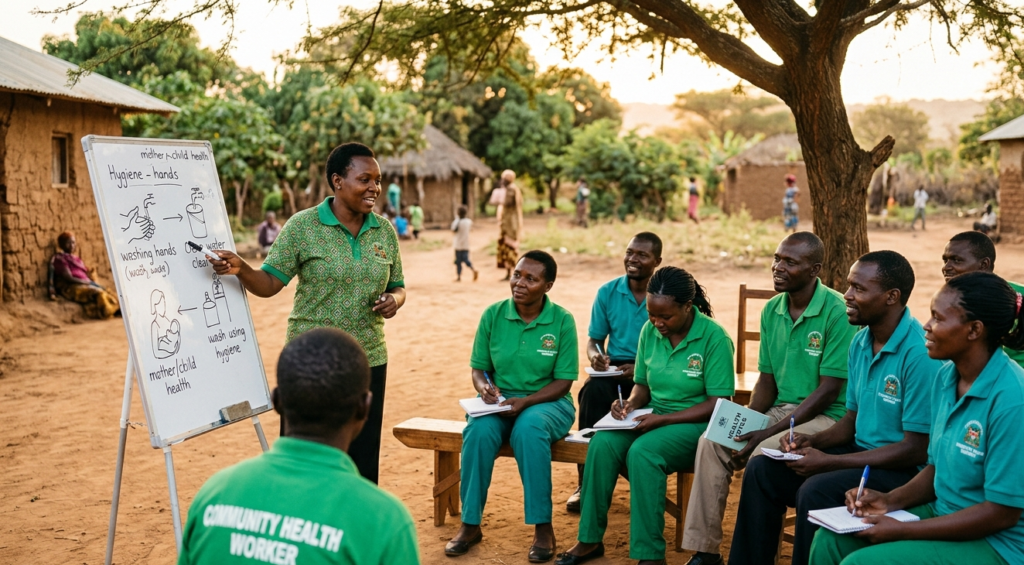
The most effective CHW training programs begin not with a syllabus, but with a clear list of competencies the specific knowledge, skills, and attitudes a CHW must demonstrate before graduating. The U.S. Centers for Disease Control and Prevention (CDC) recommends a competency-based approach that ties every training module to a measurable real-world health outcome.
Core competency areas typically include: basic anatomy and disease recognition, hygiene and sanitation education, maternal and child health basics, mental health first aid, community mapping and referral pathways, and record-keeping. When a curriculum is built around outcomes rather than content delivery, CHW graduate ready to act not just to recall facts.
Strategy 2
Hands-On Clinical Simulation in Community Health Workers Training
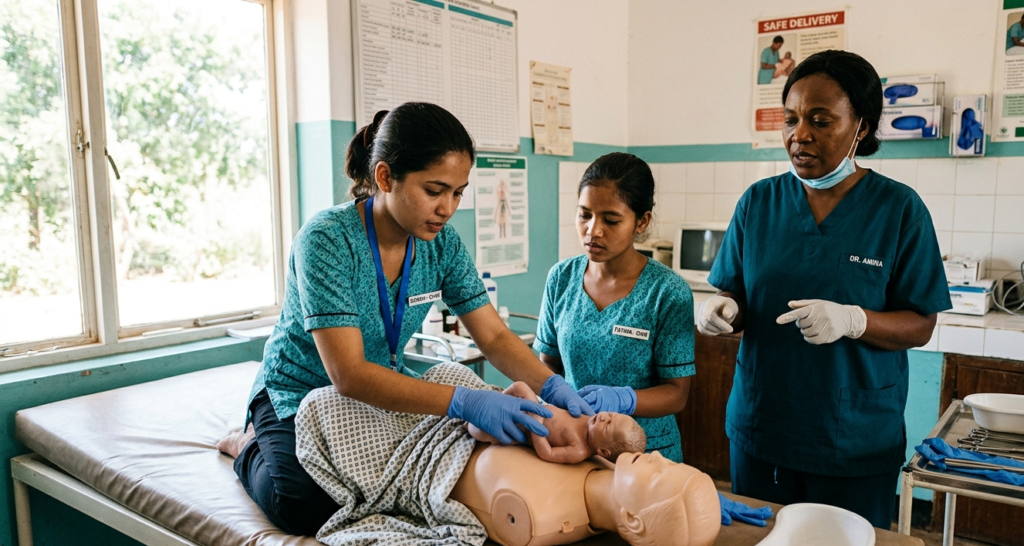
Classroom learning alone is insufficient. Studies consistently show that CHWs who undergo practical simulations — using mannequins, role-plays, or supervised clinic hours perform significantly better in the field. Simulation training builds muscle memory and emotional confidence simultaneously.
Effective simulation modules include: childbirth emergency response, malaria rapid diagnostic test administration, wound dressing and first aid, and conducting a home visit. Our CHF training programs incorporate simulation exercises at every stage to ensure learners are genuinely prepared before entering communities.
Strategy 3
Peer-to-Peer Mentorship Models
Pairing newly trained CHWs with experienced mentors accelerates learning and dramatically reduces dropout rates. In peer mentorship models, experienced health workers accompany new trainees on home visits, providing real-time feedback in culturally familiar contexts.
UNICEF’s community health research highlights that CHWs who receive mentorship in the first 90 days of deployment are 3 times more likely to remain active after 12 months. Retention is as important as training quality a well-trained CHW who leaves the program helps no one.
Strategy 4
Digital & Mobile Learning Tools for Community Health Workers Training
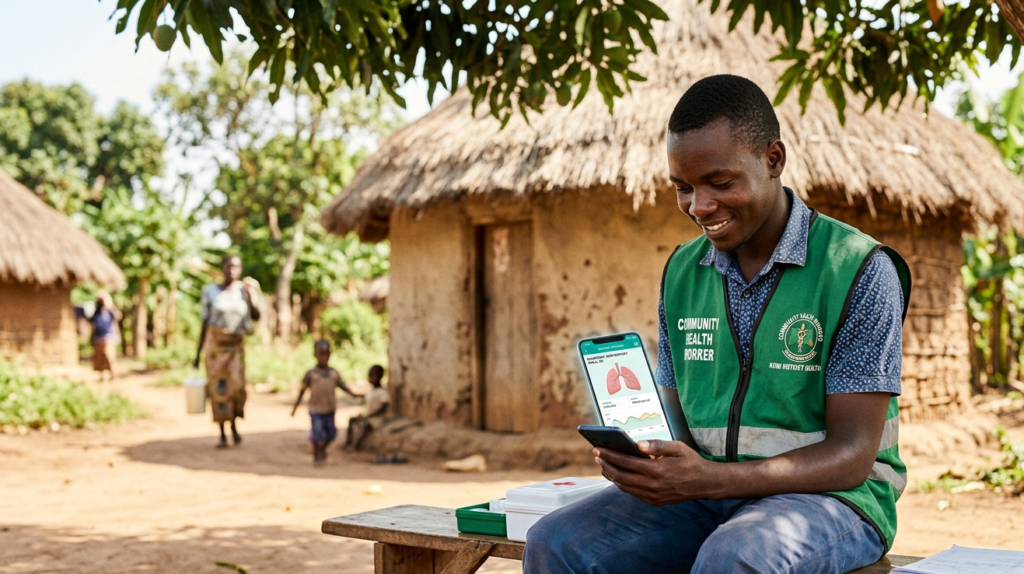
Smartphones have transformed community health workers training in low-resource settings. Mobile learning platforms delivered via WhatsApp, offline Android apps, or SMS-based modules allow CHWs to refresh knowledge between in-person sessions without expensive travel or printed materials.
Key digital tools now used globally include CommCare, mHealth apps for symptom checking, and voice-based audio learning modules for CHWs with lower literacy levels. Integrating technology into community health workers training also enables supervisors to track completion rates, quiz scores, and field performance remotely.
Strategy 5
Community-Embedded Field Training
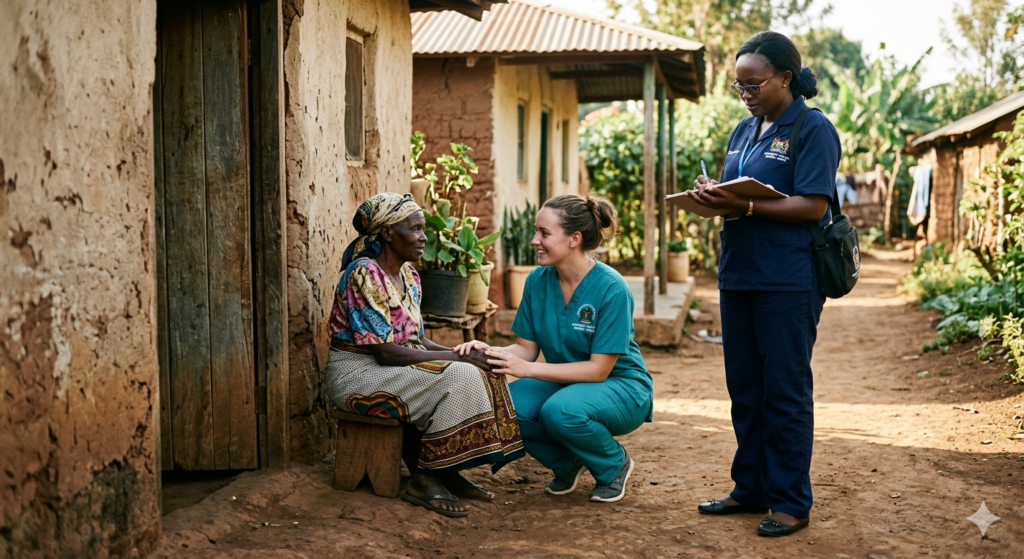
The most powerful classroom is the community itself. Field training where learners conduct supervised health education sessions, household visits, and screening drives in their own neighborhoods builds both skill and community trust simultaneously.
CHF’s Community Health Outreach Program uses embedded field training as its backbone, ensuring every CHW candidate completes at least 40 supervised community contact hours before certification. This model means that by graduation, the community already knows and trusts the new health worker.
Strategy 6
Continuous Supervision & Re-Certification in Community Health Workers Training
Training is not a one-time event it is an ongoing process. The most successful CHW programs globally operate on a continuous learning model: monthly group refresher sessions, quarterly supervisory visits, and annual re-certification exams that reflect updated health guidelines.
Continuous supervision also provides a critical safety net, catching and correcting errors before they harm patients. When CHWs know that ongoing support is available, they are more likely to ask for help when facing unfamiliar situations which directly saves lives.
How Compassionate HealthEd Foundation Approaches Community Health Workers Training
At CHF, we believe that community health workers training must be holistic, culturally responsive, and community-owned. Our Nursing & Allied Health Training Program combines all six strategies above into a cohesive curriculum that prepares CHWs for the real complexity of frontline health work.
We equip every CHW candidate with:
- A competency-based training certificate recognized by community health networks
- Hands-on simulation training in maternal health, disease prevention, and first aid
- A peer mentor assigned for the first three months of field deployment
- Access to mobile learning modules for ongoing skill development
- Quarterly re-certification and group supervision sessions
- Full integration into CHF’s Community Health Outreach teams
Our long-term vision includes a dedicated training center as part of our planned 300-bed hospital complex, where community health workers training will be institutionalized and scaled across regions.
If you are passionate about transforming healthcare access in underserved communities, explore how to get involved with CHF’s programs whether as a trainer, volunteer, or donor.
Conclusion: Community Health Workers Training Is an Investment in Humanity
The evidence is clear: when community health workers receive structured, ongoing, and practical community health workers training, entire communities become healthier. Child mortality drops. Chronic diseases are caught earlier. Mothers survive childbirth. Families make better health decisions.
None of this requires billion-dollar hospitals or imported specialists. It requires a committed training framework, the courage to invest in local people, and organizations willing to show up consistently for the communities they serve.
Compassionate HealthEd Foundation is doing exactly that one trained health worker at a time.