Introduction:
Preventive healthcare in underserved communities is one of the most powerful and cost-effective strategies for reducing long-term medical expenses while improving quality of life. Across low-income and rural areas, families often delay care due to financial barriers, limited access to facilities, or lack of health education. Unfortunately, this delay leads to advanced illnesses that require expensive treatments.
At Compassionate HealthEd Foundation, our mission is rooted in expanding equitable access to healthcare and empowering communities through education and outreach. Preventive healthcare in underserved communities aligns directly with this mission by addressing health problems before they become financial crises.
Table of Contents
- What Is Preventive Healthcare?
- Why Medical Costs Are Higher in Underserved Communities
- 7 Powerful Ways Preventive Healthcare Reduces Medical Costs
- The Role of Community-Based Programs
- Long-Term Economic Benefits
- Conclusion: Investing in Prevention Saves Lives
What Is Preventive Healthcare?
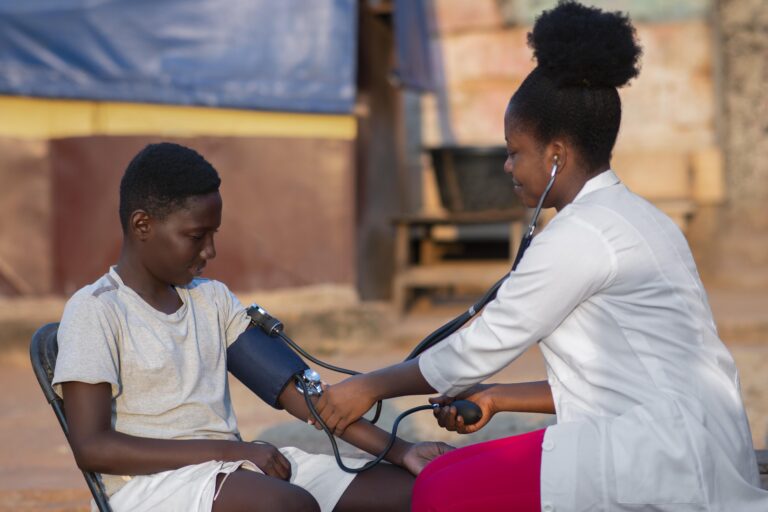
Preventive healthcare refers to medical services designed to prevent diseases rather than treat them after they develop. These include:
- Vaccinations
- Routine screenings
- Maternal and child health services
- Health education programs
- Lifestyle counseling
According to the World Health Organization, prevention is one of the most cost-effective ways to improve population health outcomes.
Preventive healthcare in underserved communities ensures that individuals receive early diagnosis and treatment, avoiding complications that require hospitalization.
Why Medical Costs Are Higher in Underserved Communities
Medical costs tend to be significantly higher in underserved communities because:
- Patients seek care late
- Chronic diseases go unmanaged
- Emergency room visits replace routine care
- Transportation barriers delay treatment
The Centers for Disease Control and Prevention reports that chronic diseases such as diabetes and hypertension are leading drivers of healthcare costs globally.
When preventive healthcare in underserved communities is absent, treatable conditions escalate into expensive emergencies.
7 Powerful Ways Preventive Healthcare in Underserved Communities Reduces Medical Costs
1) Early Detection Prevents Expensive Hospitalizations
Screenings for hypertension, diabetes, and cancer detect illness early. Early treatment is significantly cheaper than emergency surgery or long-term hospitalization.
2) Vaccination Prevents Costly Outbreaks
Immunization programs prevent diseases such as measles and pneumonia. Treating outbreaks costs far more than routine vaccinations.
The UNICEF highlights that every dollar spent on immunization saves multiple dollars in treatment costs.
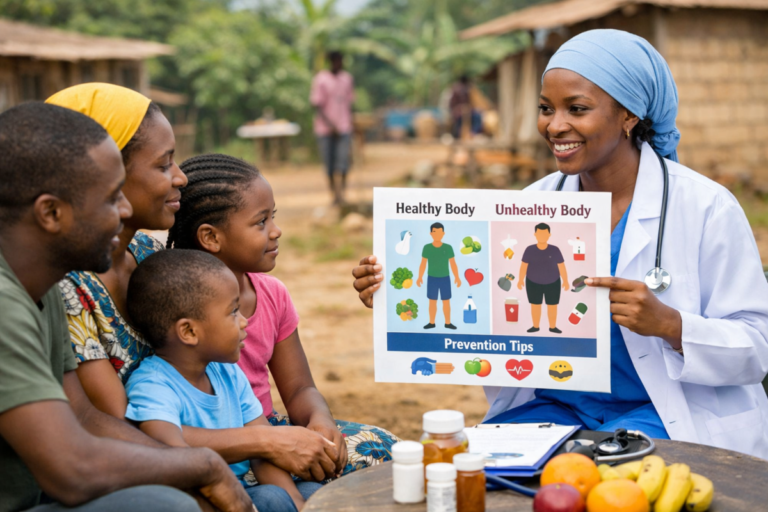
3) Health Education Reduces Risky Behaviors
Health literacy empowers individuals to make informed decisions about diet, hygiene, and physical activity. Education lowers the risk of preventable chronic illnesses.
Preventive healthcare in underserved communities depends heavily on community awareness programs.
4) Maternal and Child Care Prevents Complications
Prenatal care reduces premature births and maternal mortality. Complicated deliveries often require expensive emergency interventions.
5) Chronic Disease Management Reduces Long-Term Costs
Managing hypertension or diabetes through routine check-ups prevents kidney failure, stroke, and heart disease conditions that are extremely expensive to treat.
6) Community-Based Healthcare Lowers Transportation Costs
Mobile clinics and outreach programs reduce the need for long-distance travel to hospitals. This saves families both medical and transportation expenses.
7) Reduced Emergency Room Dependency
Emergency care is far more expensive than primary care. Preventive healthcare in underserved communities reduces unnecessary emergency visits.
The Role of Community-Based Programs
Community-based programs are essential for delivering preventive healthcare in underserved communities. Local health workers, mobile clinics, and outreach initiatives build trust and improve access.
Organizations like the World Bank emphasize that investing in primary healthcare systems produces long-term economic returns.
At Compassionate HealthEd Foundation, outreach programs and health education initiatives bridge the gap between communities and quality care.
Long-Term Economic Benefits of Preventive Healthcare in Underserved Communities
Preventive healthcare in underserved communities does more than reduce hospital bills. It:
- Increases workforce productivity
- Reduces poverty caused by medical debt
- Strengthens community resilience
- Improves school attendance for children
Healthy populations contribute more effectively to economic development. Prevention protects both lives and livelihoods.
Conclusion: Prevention Is the Most Powerful Investment
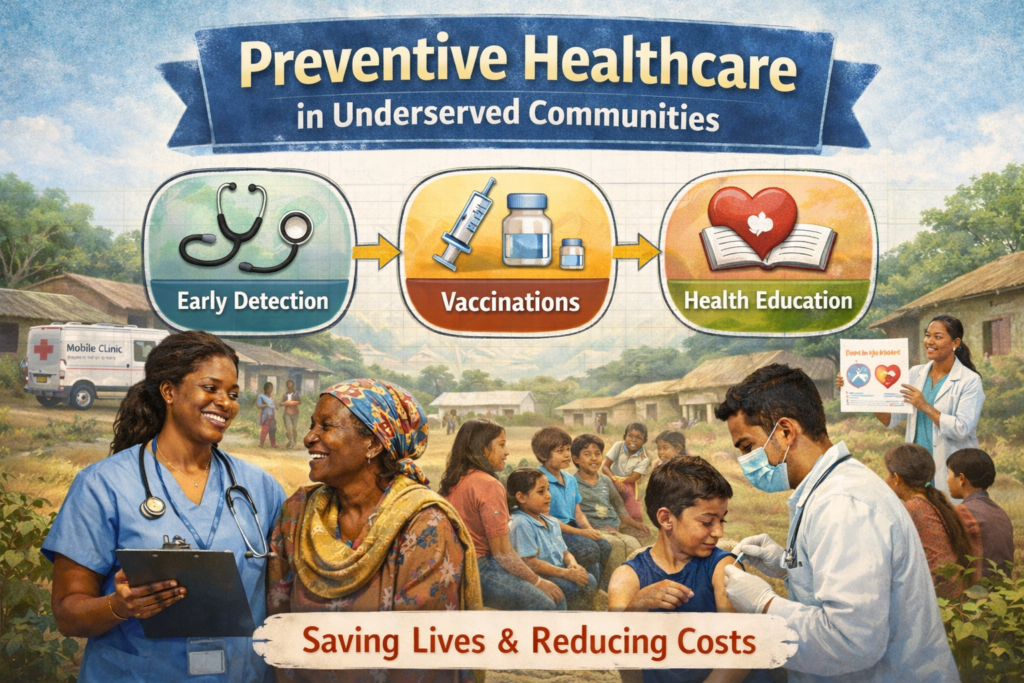
Preventive healthcare in underserved communities is not just a medical strategy it is an economic solution. By prioritizing early detection, vaccinations, education, and community outreach, we reduce medical costs while restoring dignity and hope.
When communities gain access to preventive care, they avoid catastrophic medical expenses and build healthier futures.
Investing in prevention today saves lives tomorrow.