Heart disease is not just a man’s problem. African women and heart health is one of the most urgent and most overlooked conversations in community wellness today.
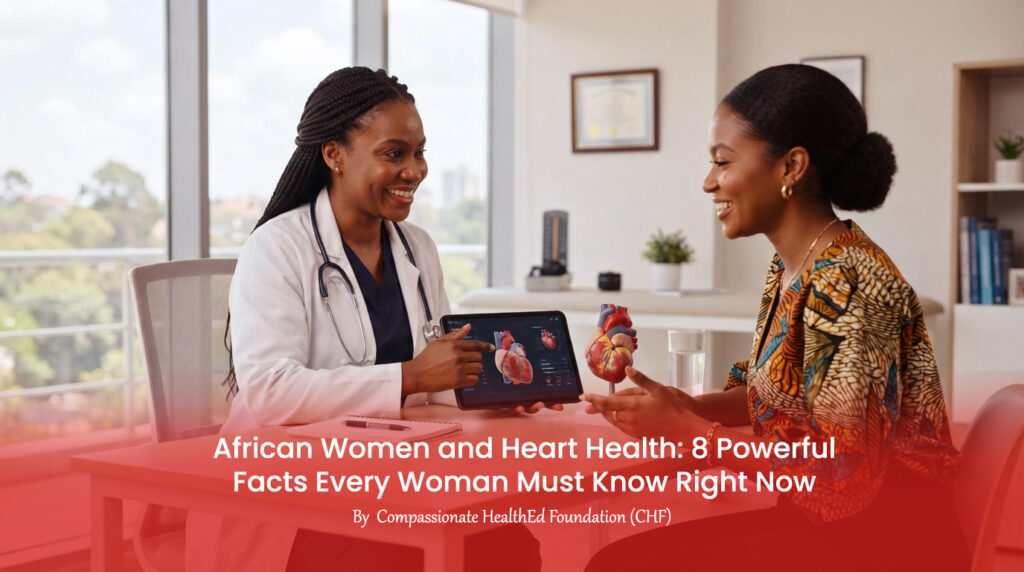
African women and heart health rarely appear in the same sentence and that silence is costing lives. For too long, heart disease has been framed as a condition that primarily affects men, and specifically men in wealthy, Western countries. But the data tells a very different story. Cardiovascular disease is the leading cause of death among women globally, and African women face a set of risk factors that are both unique and dangerously underrecognized.
According to the World Health Organization, cardiovascular diseases kill more than 17.9 million people every year accounting for 32% of all global deaths. In sub-Saharan Africa, rates of hypertension, stroke, and heart failure are rising dramatically, particularly among women. Yet awareness, screening, and access to care remain critically low.
At Compassionate HealthEd Foundation (CHF), we believe that African women deserve to understand their hearts and the specific risks that affect them. Here are 8 powerful facts about African women and heart health that every woman, and every person who loves a woman, needs to know right now.
8 powerful facts about African women and heart health
1) Heart disease is the leading killer of women not men
One of the most important facts about African women and heart health is that cardiovascular disease kills more women than any other condition worldwide. Yet the majority of women and their doctors still think of heart disease as primarily a male problem. This dangerous misconception leads to delayed diagnosis, inadequate treatment, and preventable deaths. Women’s symptoms of heart disease can also differ from men’s — presenting as fatigue, nausea, jaw pain, or breathlessness rather than the classic crushing chest pain making recognition even more critical.
2) African women have exceptionally high rates of hypertension
Hypertension high blood pressure is the single most significant modifiable risk factor for heart disease and stroke. African women and heart health are inextricably linked through this condition. Studies show that women of African descent have some of the highest rates of hypertension in the world, developing it earlier in life and at higher severity than women of other backgrounds. According to the American Heart Association, high blood pressure is called the silent killer because it produces no symptoms while causing serious damage to the heart, kidneys, and brain.
3) Pregnancy-related heart risks are significantly higher for African women
Pregnancy places enormous demands on the heart, and African women face disproportionately higher risks of pregnancy-related cardiovascular complications including preeclampsia, peripartum cardiomyopathy, and gestational hypertension. These conditions can have lasting effects on heart health long after delivery significantly raising lifetime cardiovascular risk. Understanding the connection between African women and heart health must include comprehensive maternal heart care before, during, and after pregnancy.
4) Stress and caregiving burden take a profound toll on the heart
Many African women carry extraordinary caregiving burdens raising children, caring for elderly parents, supporting extended family, managing households, and working often simultaneously and with limited support. Chronic stress is a well-established cardiovascular risk factor, elevating cortisol levels, raising blood pressure, disrupting sleep, and promoting inflammation in the arteries. The conversation about African women and heart health cannot ignore the structural and social pressures that silently strain women’s cardiovascular systems over decades.
5) Diabetes increases heart disease risk dramatically and disproportionately in women
Diabetes is a powerful risk factor for heart disease in everyone but its impact is significantly more severe in women than in men. African women and heart health are deeply affected by the rising rates of type 2 diabetes across the continent and in diaspora communities. Women with diabetes are up to four times more likely to develop heart disease than women without the condition. Managing blood sugar, diet, and physical activity is not just about diabetes prevention it is directly and powerfully protective of heart health.
6) Menopause is a critical turning point for heart health
Before menopause, estrogen provides women with a degree of natural cardiovascular protection. After menopause, that protection fades and heart disease risk rises sharply. For African women, who may experience earlier menopause and have pre-existing cardiovascular risk factors, this transition is particularly important to navigate with proper medical support. African women and heart health in the menopausal and post-menopausal years deserve urgent attention and proactive screening.
7) Diet and lifestyle are powerful and actionable heart protectors
The good news about African women and heart health is that up to 80% of cardiovascular disease is preventable through lifestyle choices. A diet rich in vegetables, fruits, whole grains, legumes, and healthy fats like those found in traditional African cuisine before it was displaced by ultra-processed foods is profoundly heart-protective. Regular physical activity, maintaining a healthy weight, not smoking, limiting alcohol, and managing stress are all changes that meaningfully reduce cardiovascular risk at any age. We have written more about protective foods in our post on foods that naturally lower blood pressure.
8) Access to care and cultural awareness must improve urgently
A critical dimension of African women and heart health is the systemic barrier of access. Many women in underserved communities both on the African continent and in diaspora communities lack access to regular heart health screening, culturally competent care, and health education in accessible languages. Cultural beliefs that normalize symptoms, or that associate hospital care with death rather than prevention, can delay life-saving interventions. Closing these gaps requires community education, mobile screening, and health workers who understand the lived realities of the women they serve.
Seek care immediately if you experience: Chest discomfort, pain radiating to the arm, jaw, neck or back, unusual fatigue, shortness of breath, nausea or dizziness. Women’s heart attack symptoms are often subtler than men’s never dismiss them. Call emergency services immediately.
What African women can do to protect their heart health today
The relationship between African women and heart health does not have to be defined by risk and loss. It can be defined by awareness, action, and community. Here is where to begin.
Know your numbers
Blood pressure, blood sugar, cholesterol, and body weight are the four key numbers every woman should know. If you do not know yours, getting them checked is the single most important first step. CHF’s Community Health Outreach Program provides free blood pressure and blood sugar screenings in underserved communities reach out to find out when we are next in your area.
Prioritize preventive checkups
Do not wait for symptoms before seeing a doctor. Routine health checkups catch cardiovascular risk factors early, when they are most manageable. We have written a full guide on why routine health checkups save lives and the message applies urgently to heart health in women.
Talk to the women in your community
African women and heart health will only improve when we talk about it openly across kitchen tables, in community groups, at church, at the market. Share this article. Ask the women you love when they last had their blood pressure checked. Normalize the conversation. Community awareness is one of the most powerful tools we have.
Your heart is carrying you — it is time to carry it back
African women are the backbone of families, communities, and generations. They carry so much — and so often put their own health last. The urgent message at the heart of African women and heart health education is this: you cannot pour from an empty cup, and you cannot care for others if your own heart is breaking down silently.
Your heart health is not a luxury. It is not something to address later, when the children are grown, when work slows down, when things are less busy. It is urgent. It is now. And you are worth the appointment, the checkup, the conversation, and the care.
At CHF, we are committed to making sure that African women have access to the health education and services they deserve because healthier women mean healthier families, healthier communities, and a healthier world.
Community tip: Share this article in your women’s group, church group, or family WhatsApp. Ask every woman you know one question this week: “When did you last have your blood pressure checked?” That question could save a life.
About Compassionate HealthEd Foundation (CHF)
CHF is a nonprofit bringing equitable healthcare and health education to underserved communities through outreach, preventive campaigns, training, and humanitarian support. Learn more at compassionatehealthed.org or support our work today.