Your Guide to Lasting Wellness
Introduction:
What if I told you that the secret to a longer, healthier life isn’t found in expensive medical treatments or complicated wellness programs? The truth is, it’s hidden in the everyday choices you make. Prevention is always better than cure, and the habits you build today can literally save your life tomorrow.
According to the CDC, chronic diseases account for 90% of healthcare costs in the United States, yet many of these conditions are preventable. Heart disease, diabetes, obesity, and cancer the leading causes of death often stem from lifestyle factors we can control. The good news? Small, consistent daily habits have the power to dramatically reduce your risk of serious illness and help you live a vibrant, fulfilling life.
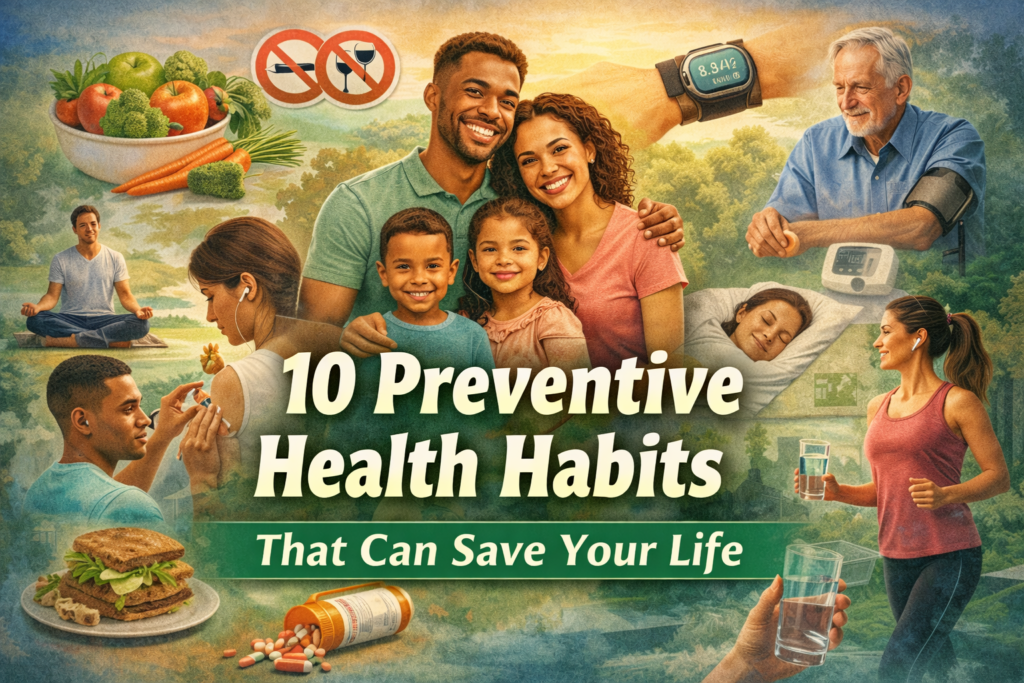
This blog post will guide you through 10 essential preventive health habits that can transform your health from the inside out. These aren’t complicated strategies requiring gym memberships or extreme diets. They’re practical, science-backed habits that fit seamlessly into your daily routine. Let’s dive in!
The 10 Preventive Health Habits
1. Eat a Balanced and Nutritious Diet

Your diet is the foundation of your health. What you eat directly impacts your energy levels, weight, immune system, and risk of chronic diseases. A balanced diet rich in whole grains, lean proteins, fruits, and vegetables provides essential nutrients your body needs to function optimally.
Focus on adding more real, unprocessed foods to your meals. Instead of thinking about restriction, think about nourishment. Fill half your plate with colorful vegetables, one quarter
with lean protein (fish, chicken, beans, or legumes), and one quarter with whole grains. These simple changes can reduce your risk of heart disease, diabetes, and certain cancers.
Practical tip: Start by planning just one nutritious meal a day. As this becomes easier, gradually expand to other meals.
2. Exercise Regularly

Physical activity is a superpower for your health. Regular exercise strengthens your heart, improves blood sugar control, maintains healthy weight, and even boosts mental health. You don’t need to run marathons or spend hours in the gym—moderate activity is all you need.
The WHO recommends at least 150 minutes of moderate-intensity aerobic activity per week, plus muscle-strengthening activities twice a week. This could mean a brisk 30-minute walk five days a week, a yoga class, swimming, cycling, or dancing. The best exercise is the one you’ll actually do consistently.
3. Get Enough Quality Sleep

Sleep is when your body repairs itself and consolidates memories. Poor sleep increases your risk of heart disease, diabetes, obesity, and depression. Most adults need 7-9 hours of quality sleep each night.
Improve your sleep by maintaining a consistent bedtime, creating a dark and cool sleeping environment, and avoiding screens 30 minutes before bed. Good sleep hygiene is an investment in your health that pays dividends in every area of your life.
4. Drink Enough Water

Proper hydration affects everything—your digestion, energy levels, joint health, and cognitive function. Dehydration can cause fatigue, headaches, and poor concentration. A general guideline is drinking half your body weight in ounces of water daily, though individual needs vary. Keep a water bottle with you throughout the day as a visual reminder. You can also eat waterrich foods like watermelon, cucumbers, and leafy greens to boost your hydration
5. Manage Stress Effectively

Chronic stress wreaks havoc on your health, increasing inflammation, blood pressure, and risk of heart disease. Managing stress isn’t a luxury—it’s essential preventive medicine. Everyone’s stress management looks different, so find what works for you.
Effective stress management techniques include meditation, deep breathing exercises, journaling, yoga, spending time in nature, or hobbies you enjoy. Even just 10 minutes daily of stress reduction can make a significant difference in your overall health.Get Involved
6. Schedule Regular Medical Checkups

Prevention includes early detection. Regular checkups allow your doctor to catch potential health issues before they become serious. These visits also give you an opportunity to discuss your family history, lifestyle, and any concerns.
Most adults should see their doctor annually, though this may vary based on age and health status. Don’t wait until something hurts to see a healthcare professional—preventive care saves lives and money.
7. Maintain Good Hygiene Practices

Simple hygiene habits prevent the spread of illness and disease. Handwashing is one of the most effective ways to prevent respiratory infections, food-borne illnesses, and other infections.
Wash your hands frequently—especially before eating, after using the restroom, and after being in public spaces. Also practice good oral hygiene by brushing twice daily and flossing, which reduces your risk of gum disease and heart problems.
8. Avoid Smoking and Harmful Substances

Smoking is one of the leading preventable causes of death worldwide. It damages nearly every organ system and significantly increases your risk of cancer, heart disease, and lung disease. If you smoke, quitting is the single best thing you can do for your health.
Similarly, limit alcohol consumption and avoid recreational drugs. These substances damage your body and increase your risk of addiction, accidents, and chronic disease.
9. Maintain a Healthy Weight

Being overweight or obese increases your risk of numerous chronic conditions including heart disease, diabetes, certain cancers, and joint problems. A healthy weight is different for everyone based on height, age, and body composition. Instead of focusing on a number on the scale, focus on healthy habits—eating nutritious foods, moving your body regularly, and sleeping well. The weight loss will follow naturally
10. Build and Maintain Strong Social Connections

Social relationships are essential to health and longevity. People with strong social connections have lower rates of anxiety, depression, and even premature death. Loneliness, on the other hand, is as harmful to health as smoking or obesity.
Invest time in meaningful relationships with family and friends. Join clubs, volunteer, attend community events, or simply schedule regular phone calls with loved ones. These connections nourish your mental and physical health.
Conclusion:
Practical Tips to Get Started Today
You don’t need to overhaul your life overnight. Start with these actionable steps:
- This week: Choose one habit to focus on. Maybe it’s adding a vegetable to dinner or taking a 20-minute walk.
- Next week: Add a second habit once the first feels manageable.
- Track your progress: Use a calendar or app to mark off days you complete your chosen habit.
- Find accountability: Tell a friend about your goals or join a health-focused community.
- Be patient with yourself: Building habits takes 21-66 days. Consistency matters more than perfection.
At Compassionate HealthEd Foundation, we believe that small, consistent healthy habits can create powerful changes in individuals, families, and entire communities. Through health education and awareness, we are committed to helping people make informed choices that lead to healthier and more fulfilling lives.
Remember, every positive step you take today brings you closer to a healthier tomorrow. Start small, stay consistent, and let your journey inspire others around you.