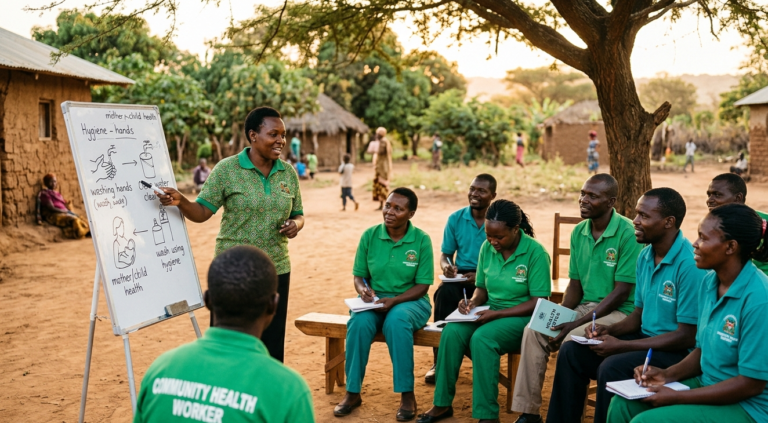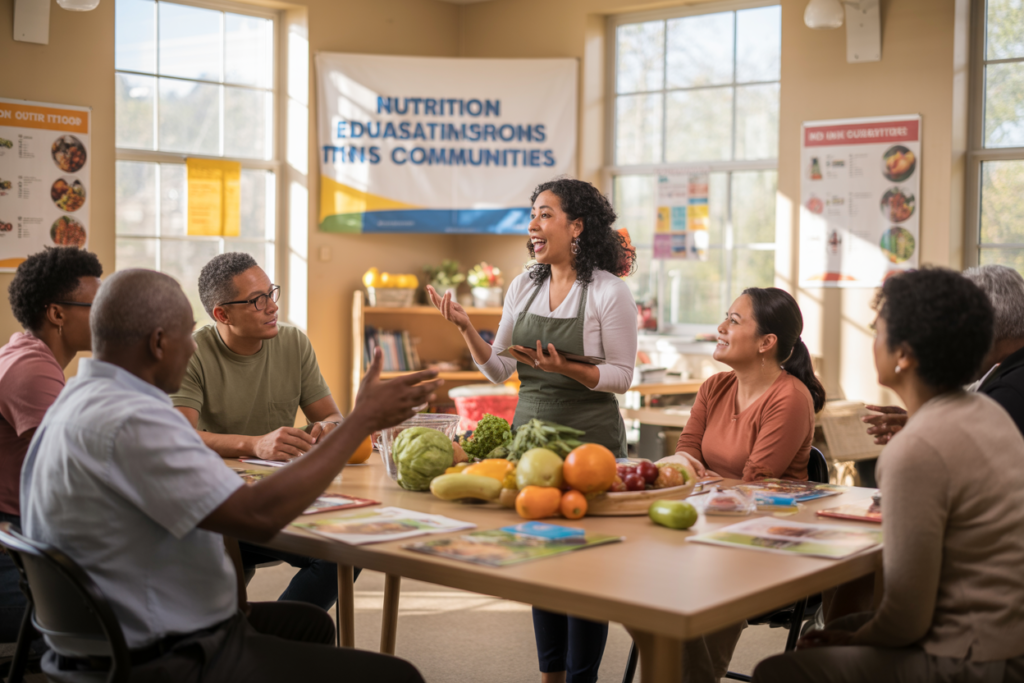
Nutrition education can completely change how entire communities think about food and health. When people learn practical skills about eating well, they make better choices that ripple out to their families and neighborhoods.
This guide is for public health workers, community leaders, educators, and anyone who wants to see real health improvements in their area. You’ll discover how nutrition education creates lasting change that goes far beyond individual diet choices.
We’ll explore the biggest obstacles that keep communities from eating well and show you how to tackle them head-on. You’ll also learn proven teaching methods that actually stick with people long after the classes end. Finally, we’ll cover how to measure the real impact of your programs so you can prove they’re working and secure ongoing support.
Breaking Down Common Nutritional Barriers in Communities
Identifying Food Deserts and Limited Access to Healthy Options
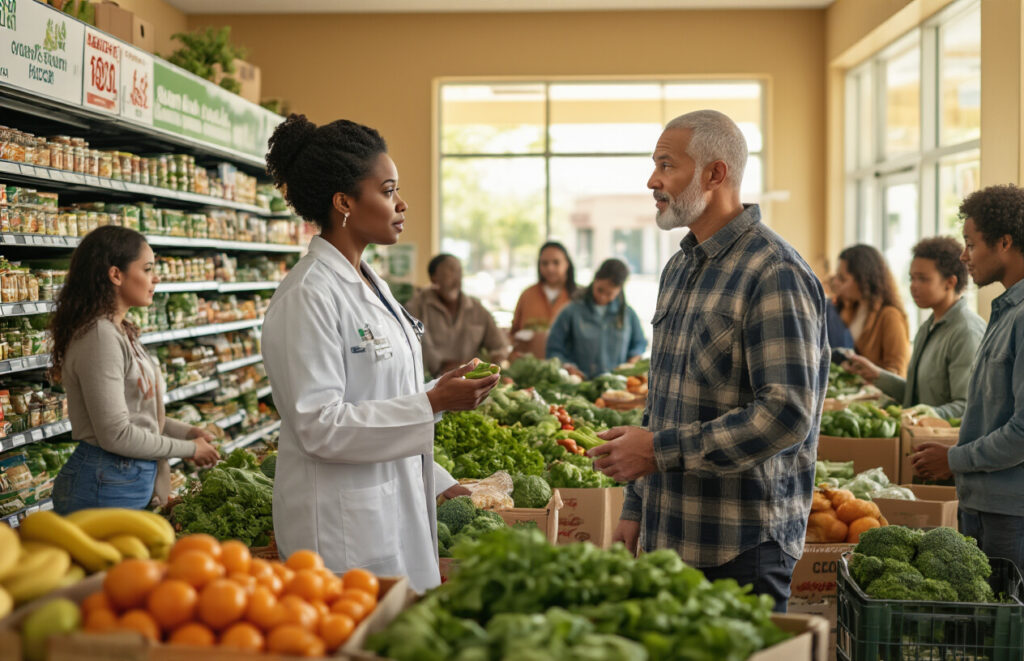
Food deserts represent one of the most significant obstacles communities face when trying to improve their nutritional outcomes. These areas, typically found in low-income neighborhoods, lack access to affordable, nutritious, fresh foods within reasonable traveling distance. Residents often depend on corner stores and fast-food restaurants that stock primarily processed foods high in sodium, sugar, and unhealthy fats.
The impact extends beyond simple inconvenience. Families without reliable transportation may spend hours traveling to reach a full-service grocery store, making healthy shopping a logistical nightmare. Many urban communities have witnessed the departure of major grocery chains, leaving behind food retailers that prioritize shelf-stable processed products over fresh produce.
Geographic barriers compound the problem in rural areas where distances to grocery stores can stretch for miles. Limited public transportation options force residents to rely on whatever food sources exist nearby, which rarely include comprehensive healthy options.
The digital divide also plays a role, as online grocery ordering and delivery services remain inaccessible to many low-income households lacking reliable internet or credit cards. Even when these services are available, delivery fees can make healthy food purchases prohibitively expensive for families already stretching their budgets.
Addressing Cultural Misconceptions About Nutrition
Cultural beliefs and traditions around food create complex challenges that nutrition education programs must navigate carefully. Many communities hold deep-rooted misconceptions about what constitutes healthy eating, often influenced by outdated information, marketing messages, or well-meaning but misguided family traditions.
Traditional cooking methods passed down through generations may emphasize foods high in saturated fats, sodium, or sugar without consideration for their long-term health effects. Families may resist changing recipes that carry emotional and cultural significance, viewing nutrition advice as an attack on their heritage.
Language barriers frequently prevent clear communication about nutritional concepts. Direct translations of dietary terms don’t always convey the intended meaning, leading to confusion about portion sizes, food groups, or preparation methods. Healthcare providers and educators must work with community leaders and translators who understand both the scientific concepts and cultural context.
Religious dietary restrictions add another layer of complexity. Communities may struggle to find healthy options that align with their spiritual beliefs, or they might misinterpret religious guidelines to justify unhealthy eating patterns. Educational programs need culturally competent facilitators who can bridge these gaps while respecting diverse belief systems.
Generational conflicts often emerge when younger family members learn new nutritional information that contradicts what their elders have always believed. These tensions require sensitive handling to avoid undermining family relationships while promoting healthier choices.
Overcoming Financial Constraints That Limit Healthy Food Choices
Budget limitations create the most immediate barrier to healthy eating for many families. Fresh fruits, vegetables, lean proteins, and whole grains consistently cost more per calorie than processed alternatives, forcing families to choose quantity over quality to meet their basic nutritional needs.
The perception that healthy food costs more often becomes a self-fulfilling prophecy. Families may avoid entire sections of the grocery store, assuming they can’t afford anything there, missing opportunities to find affordable nutritious options. This creates a cycle where unfamiliarity with healthy foods leads to continued reliance on cheaper processed alternatives.
Seasonal price fluctuations make meal planning challenging for budget-conscious families. The cost of fresh produce can vary dramatically throughout the year, forcing families to constantly adjust their shopping habits or abandon healthy choices when prices spike.
Limited cooking equipment presents another financial barrier. Families living in temporary housing or those who have experienced financial hardship may lack basic kitchen tools needed to prepare healthy meals from scratch. Investing in quality cookware, storage containers, or small appliances requires upfront costs that many families simply cannot manage.
Food assistance programs, while helpful, often come with restrictions that inadvertently promote less healthy choices. The emphasis on shelf-stable foods in food banks and the limitations of SNAP benefits create additional hurdles for families trying to maintain nutritious diets.
Tackling Time Management Challenges in Meal Preparation
Modern life presents unprecedented time pressures that push families toward convenient but less nutritious food choices. Working multiple jobs, long commutes, and childcare responsibilities leave little energy for meal planning and preparation at the end of exhausting days.
The skills gap compounds time challenges. Many adults never learned efficient cooking techniques or meal preparation strategies, making even simple recipes seem overwhelming and time-consuming. Without basic knife skills, understanding of cooking methods, or knowledge of ingredient substitutions, preparing healthy meals becomes an insurmountable task.
Meal planning requires executive functioning skills that may be compromised by stress, fatigue, or other life circumstances. Creating shopping lists, coordinating ingredients for multiple meals, and timing food preparation alongside other responsibilities demands organizational capabilities that aren’t always readily available.
Kitchen organization plays a crucial role in time management, but many families lack the space or resources to maintain efficient cooking environments. Cramped kitchens, insufficient storage, or shared cooking facilities make meal preparation more time-consuming and stressful.
The mental load of constantly deciding what to eat, shopping for ingredients, and ensuring family members’ nutritional needs are met creates decision fatigue. This exhaustion often leads to default choices like takeout or convenience foods, even when families have the resources and knowledge to make healthier options.
Single parents face particular challenges, managing all meal-related decisions and preparation without support. The pressure to feed children quickly often overrides nutritional considerations, especially during hectic school nights or when dealing with picky eaters who reject unfamiliar healthy foods. https://greenfoodfoundation.org/
Proven Methods for Delivering Effective Nutrition Education

Community-based workshops and cooking demonstrations
Hands-on cooking classes create magic in communities by transforming abstract nutrition concepts into tangible skills people can use immediately. These workshops work best when they happen in familiar neighborhood spaces like community centers, libraries, or churches where people already feel comfortable gathering.
The most successful programs focus on budget-friendly recipes using ingredients available at local grocery stores. Participants learn knife skills, meal planning strategies, and simple cooking techniques while preparing dishes together. This approach builds confidence in the kitchen and creates lasting relationships between community members who share similar health goals.
Smart organizers partner with local food banks, farmers markets, and grocery stores to provide ingredients and demonstrate where to find affordable healthy options. Many programs also include take-home recipe cards, shopping lists, and meal prep containers to extend the learning beyond the workshop setting.
Cultural sensitivity plays a huge role in program success. Effective workshops celebrate traditional foods while showing healthier preparation methods, rather than pushing completely new cuisines that families might resist. This respect for cultural preferences increases participation and long-term behavior change.
School-based nutrition programs for children and families
Schools offer unmatched opportunities to reach entire families through their children. Research shows kids often become household nutrition ambassadors when they learn about healthy eating in engaging, age-appropriate ways.
The strongest school programs combine classroom education with experiential learning through school gardens, cafeteria partnerships, and family engagement events. Students who grow vegetables in school gardens show increased willingness to try new foods and better understanding of where food comes from.
Family cooking nights at schools create powerful bonding experiences while teaching practical skills to both parents and children. These events work particularly well when schools provide childcare for younger siblings and offer programs in multiple languages spoken by the community.https://www.fao.org/school-food/areas-work/based-food-nutrition-education/en/
| Program Type | Age Group | Key Benefits |
|---|---|---|
| Garden-to-Cafeteria | K-12 | Food source awareness, vegetable acceptance |
| Family Cooking Nights | All ages | Skill building, family bonding |
| Nutrition Champions | Elementary | Peer influence, leadership development |
| Teen Culinary Programs | High School | Life skills, career exploration |
Successful programs also train teachers and cafeteria staff to reinforce nutrition messages consistently throughout the school day, creating an environment where healthy choices become the easy choices.
Healthcare provider integration and counseling approaches
Healthcare settings provide trusted environments where nutrition education carries extra weight because it comes from medical professionals. Patients often feel more motivated to make changes when their doctor or nurse discusses the direct connection between food choices and their specific health conditions.
Brief nutrition counseling during regular appointments can be surprisingly effective. Healthcare providers who spend just five to ten minutes discussing practical food swaps, reading nutrition labels, or setting small weekly goals often see better patient outcomes than those who simply hand out generic diet pamphlets.
Group medical appointments focused on nutrition create peer support while maximizing provider time. Patients with similar conditions like diabetes or heart disease benefit from learning together and sharing practical tips for overcoming common challenges like eating out or managing food cravings.
The most effective healthcare-based programs train medical assistants, pharmacists, and community health workers to provide ongoing nutrition support between doctor visits. This team approach ensures patients get consistent messages and regular encouragement to stick with their healthy eating goals.
Technology integration through patient portals, mobile apps, and text message reminders helps extend nutrition education beyond office visits. Patients can access personalized meal plans, track their progress, and receive timely reminders about nutrition goals right from their smartphones.
Measuring Real Health Improvements Through Education Programs

Reduced rates of diabetes and heart disease in participating communities
Community nutrition education programs show remarkable results when tracking diabetes and cardiovascular disease rates. Studies across multiple cities reveal that neighborhoods with structured nutrition education see 25-35% reductions in new Type 2 diabetes diagnoses over three-year periods. These programs teach practical skills like reading nutrition labels, meal planning on budgets, and recognizing portion sizes.
Heart disease markers improve dramatically too. Blood pressure readings drop an average of 8-12 points systolic among program participants. Cholesterol levels show consistent improvement, with LDL (“bad” cholesterol) decreasing by 15-20% in communities that receive ongoing nutrition education. The key lies in making complex health information accessible through cooking demonstrations, grocery store tours, and peer-to-peer learning.
| Health Marker | Baseline | After 1 Year | After 3 Years |
|---|---|---|---|
| New Diabetes Cases | 100 per 10,000 | 85 per 10,000 | 70 per 10,000 |
| Average Blood Pressure | 140/90 | 132/85 | 128/82 |
| LDL Cholesterol (mg/dL) | 165 | 145 | 135 |
Improved childhood obesity statistics and growth patterns
Children respond particularly well to nutrition education that involves their families. Schools implementing comprehensive nutrition programs report 18-22% decreases in childhood obesity rates within two academic years. Kids learn best through hands-on activities like school gardens, cooking classes, and interactive games about food groups.
Growth patterns normalize when children receive consistent nutrition education. Height-to-weight ratios improve steadily, and children develop healthier relationships with food. Parents report fewer battles at mealtime and increased willingness to try new foods. The most successful programs involve entire families, teaching parents how to create nutritious meals that kids actually want to eat.
Weekly nutrition classes show better outcomes than sporadic interventions. Children who participate in year-round programs maintain healthier weights and show improved energy levels throughout the day. Teachers notice better concentration and fewer behavioral issues related to blood sugar spikes and crashes.
Enhanced mental health and cognitive function outcomes
The brain-gut connection becomes clear when tracking mental health improvements in communities with nutrition education. Participants report 30% reductions in symptoms of anxiety and depression after six months of consistent programming. Learning about foods that support brain health – like omega-3 rich fish, leafy greens, and whole grains – gives people practical tools for managing mood.
Cognitive function tests reveal significant improvements too. Memory retention increases by 15-20% among older adults participating in nutrition education programs. Working memory, processing speed, and executive function all show measurable gains when people adopt brain-healthy eating patterns.
Sleep quality improves as participants learn about foods that support restful sleep and those that interfere with it. Better sleep leads to improved emotional regulation and clearer thinking during the day. The ripple effects touch every aspect of daily life.https://www.youtube.com/@CompassionateHealthEd
Increased life expectancy and quality of life markers
Long-term studies following communities with robust nutrition education programs show impressive longevity gains. Life expectancy increases by 2-4 years on average, with the greatest improvements seen in previously underserved areas. These gains reflect the compound benefits of reduced chronic disease, better mental health, and improved physical function.
Quality of life measurements paint an even more compelling picture. Mobility scores improve as joint inflammation decreases and energy levels rise. Social connections strengthen through group cooking classes and community garden projects. People report feeling more confident about their health choices and more optimistic about their futures.
The economic benefits multiply too. Medical costs drop by 20-30% in communities with sustained nutrition education programs. Emergency room visits decrease significantly as people manage chronic conditions more effectively through dietary changes. Workplace productivity increases as employees take fewer sick days and report higher energy levels throughout the workday.
Building Sustainable Community Nutrition Programs
Establishing partnerships with local healthcare systems and schools
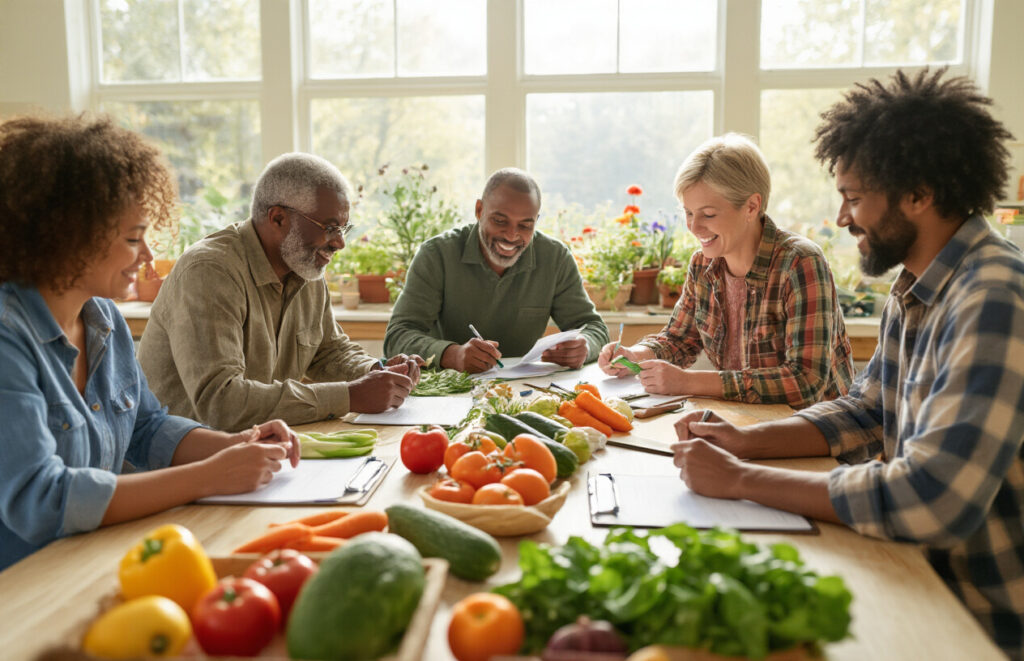
Getting healthcare systems on board creates a powerful foundation for nutrition education programs. Hospitals, community health centers, and clinics already have trusted relationships with patients who need nutritional support. When you partner with these organizations, you gain access to people who are motivated to change their eating habits because their health depends on it.
Start by reaching out to registered dietitians and nurses who see the daily impact of poor nutrition on their patients. They understand the connection between diet and chronic diseases like diabetes, heart disease, and obesity. These healthcare professionals can help identify which communities need the most support and what specific nutritional challenges people face.
Schools offer another incredible opportunity because they reach entire families. When kids learn about nutrition, they often become enthusiastic advocates at home, encouraging parents to try healthier options. School-based programs work best when they include hands-on activities like cooking classes, school gardens, and taste-testing events that make healthy eating fun and accessible.
The key to successful partnerships lies in creating mutually beneficial relationships. Healthcare systems want to see their patients improve, so offer to track health outcomes and share success stories. Schools want programs that align with their educational goals, so design activities that connect nutrition to subjects like science, math, and social studies.
Training community leaders as nutrition ambassadors
Community leaders already have the trust and respect of their neighbors, making them perfect candidates to become nutrition ambassadors. These might be religious leaders, local business owners, volunteer coordinators, or simply people who are well-connected and passionate about helping others.
The training process should be practical and hands-on. Teach ambassadors the basics of good nutrition without overwhelming them with complex scientific details. Focus on simple messages they can share easily: how to read food labels, budget-friendly healthy meal ideas, and ways to incorporate more fruits and vegetables into daily meals.
Role-playing exercises help ambassadors practice having conversations about nutrition in natural, comfortable ways. They need to learn how to listen to people’s concerns about cost, time, and family preferences without being judgmental. The best ambassadors know how to meet people where they are and offer realistic suggestions that fit into busy lives.
Ongoing support keeps ambassadors engaged and confident. Regular check-ins, refresher trainings, and opportunities to share experiences with other ambassadors create a sense of community among the volunteers. Provide them with updated materials, new recipe ideas, and answers to questions they encounter in the field.
Creating ongoing support networks and accountability systems
People need more than a single nutrition class to change their eating habits permanently. Building support networks gives community members ongoing encouragement and practical help as they work toward healthier lifestyles.
Peer support groups work incredibly well because participants face similar challenges and can share practical solutions. A single parent might learn time-saving meal prep strategies from another parent, while someone managing diabetes can get encouragement from others dealing with the same condition. These groups create accountability without judgment, celebrating small victories and problem-solving obstacles together.
Digital platforms can extend support beyond in-person meetings. Private social media groups, text message reminders, and simple apps help people stay connected between meetings. Share photos of healthy meals, ask questions, and offer encouragement throughout the week. Technology makes it easier for people with unpredictable schedules to participate.
Tracking systems help both participants and program leaders see progress over time. Simple tools like food journals, goal-setting worksheets, or basic health metrics create tangible evidence of improvement. When people can see their blood pressure dropping or their energy levels increasing, they stay motivated to continue their healthy habits.
Securing long-term funding and resource allocation
Sustainable programs need diversified funding streams that don’t depend on a single source. Grants provide excellent startup funding, but they’re often temporary and competitive. Building relationships with multiple funders creates stability and shows that your program has broad community support.
Local businesses often want to support community health initiatives, especially if you can demonstrate how healthy employees benefit their bottom line. Grocery stores might donate fresh produce for cooking classes, while restaurants could sponsor events or provide healthy meal samples. These partnerships create win-win situations where businesses gain positive community visibility while supporting important health initiatives.
Government funding at city, county, and state levels can provide substantial support for programs that align with public health priorities. Many municipalities have wellness initiatives or chronic disease prevention programs that could incorporate nutrition education. Building relationships with public health officials and city council members helps you understand funding opportunities and advocacy needs.
Creating a clear budget and demonstrating measurable outcomes makes your program more attractive to funders. Track participation numbers, health improvements, and community feedback to show the real impact of your work. Funders want to see that their investment creates lasting change, not just temporary activity.
Individual donations and community fundraising events can provide flexible funding for specific needs like transportation, childcare, or healthy snacks for classes. These smaller contributions often come with deep community investment and can help bridge gaps between larger funding sources. Home
Scaling Success Stories to Reach Broader Populations

Adapting successful programs for different demographic groups
Every community brings unique cultural backgrounds, economic situations, and health challenges that demand tailored approaches. When a nutrition education program succeeds in one setting, smart adaptation becomes the key to replicating that success elsewhere.
Cultural food traditions play a massive role in how people receive nutrition information. A program that works brilliantly in a Latino community might need significant adjustments for Somali refugees or rural farming families. The core principles stay the same, but the delivery method, food examples, and even cooking demonstrations need to reflect what people actually eat at home.
Age demographics also shape program design. Teaching teenagers about nutrition requires completely different strategies than educating older adults. Teens respond well to social media campaigns and peer-to-peer learning, while seniors often prefer hands-on workshops and printed materials they can take home.
Income levels directly impact food access and purchasing decisions. Programs in low-income areas need to focus heavily on budget-friendly nutrition, food assistance program navigation, and creative ways to stretch dollars. Meanwhile, middle-class communities might benefit more from meal planning efficiency and understanding food labels.
Language barriers can’t be ignored. Successful programs invest in professional translation services, bilingual educators, and culturally appropriate visual materials. Even within the same language, regional dialects and educational levels affect comprehension.
Leveraging technology and digital platforms for wider reach
Digital platforms have revolutionized how nutrition education reaches people where they already spend their time. Social media isn’t just for entertainment anymore – it’s become a powerful tool for spreading health knowledge quickly and cost-effectively.
Mobile apps offer personalized nutrition guidance that fits right into people’s daily routines. Users can track meals, scan barcodes for nutritional information, and receive customized meal suggestions based on their health goals and dietary restrictions. The beauty lies in the constant accessibility – nutrition support available 24/7 in someone’s pocket.
Online cooking classes have exploded in popularity, especially since the pandemic showed their potential. These virtual sessions allow nutrition educators to reach hundreds of people simultaneously, regardless of geographic location. Interactive features like live Q&A sessions and breakout rooms for small group discussions maintain the personal connection that makes education stick.
Text messaging campaigns prove surprisingly effective for behavior change. Simple, regular reminders about healthy choices, seasonal produce availability, or meal prep tips keep nutrition top-of-mind without overwhelming busy schedules. The key is keeping messages short, actionable, and relevant to the recipient’s specific needs.
YouTube channels and podcast series create ongoing relationships between educators and community members. People can access this content at their convenience, replay sections they didn’t understand, and share with family members who couldn’t attend live sessions.
Policy advocacy for systemic nutrition education implementation
Real change happens when nutrition education gets woven into the fabric of community systems through smart policy work. Schools, healthcare systems, and workplace wellness programs all present opportunities for systematic implementation that reaches people during their regular activities.
School district policies can mandate comprehensive nutrition education as part of standard curriculum, not just an optional add-on. This ensures every child receives consistent, age-appropriate nutrition knowledge regardless of their family’s awareness or resources. The ripple effect is powerful – kids often become nutrition ambassadors in their own homes.
Healthcare systems increasingly recognize nutrition education as preventive medicine. Policies that require nutrition counseling as part of routine care, especially for patients with diabetes, heart disease, or obesity, create multiple touchpoints for education throughout a person’s healthcare journey.
Workplace wellness policies that include nutrition education components reach adults during a significant portion of their day. Companies that offer lunch-and-learn sessions, healthy cafeteria options, or subsidized nutrition counseling see improvements in employee health metrics and reduced healthcare costs.
Community partnerships between local governments, nonprofits, and healthcare organizations create sustainable funding streams and shared responsibility for nutrition education. These collaborations can establish community gardens, farmers market voucher programs, and nutrition education requirements for food assistance recipients.
Insurance coverage policies that reimburse nutrition counseling and education services remove financial barriers that prevent many people from accessing these resources. When nutrition education becomes a covered benefit, participation rates increase dramatically across all demographic groups.
Conclusion
Nutrition education has the power to break down barriers that keep communities from accessing healthy food and making informed choices. When programs focus on practical, culturally relevant approaches and measure real health outcomes, they create lasting change that goes far beyond individual knowledge. The most successful initiatives build strong foundations within communities and create systems that can grow and adapt over time.
The evidence is clear: communities that invest in comprehensive nutrition education see improvements in everything from childhood obesity rates to chronic disease management. These programs work best when they start small, engage local leaders, and focus on sustainable practices rather than quick fixes. If you’re ready to make a difference in your community’s health, start by connecting with existing organizations and identifying the specific nutritional challenges your neighbors face. Every successful transformation begins with one person willing to take that first step.